


A Flood Rescue Mission I’ll Never Forget – DJI Matrice 4TD Experience
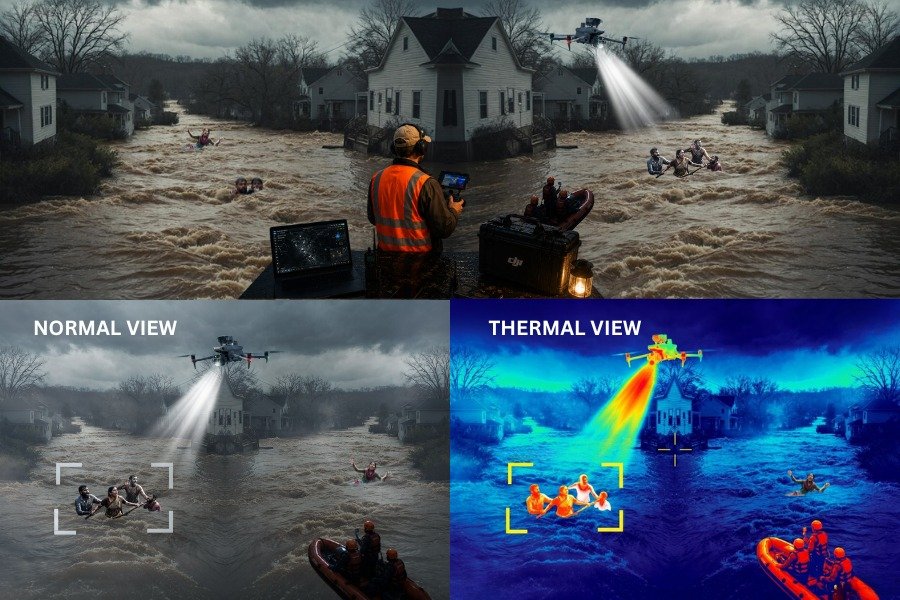
13th July 2025. Around 9:00 PM.
Some nights stay in your memory forever, and for me, this was one of them.
That evening felt completely normal until the emergency call came. I was at home checking news updates and scrolling through flood-related reports coming from different parts of North India. Slowly, the situation in Punjab started becoming serious. Heavy rainfall had already flooded several villages near Gurdaspur, and rescue teams were struggling because water levels were continuously rising.
Around 9 PM, I received a call from a defence response unit operating near Gurdaspur, Punjab. They urgently needed drone support for a night rescue operation. Normally, drone work means inspections, aerial shots, mapping, or surveying. But this time things were completely different. The situation felt far more serious than a regular operation.
The operation had to be performed during the night in difficult weather conditions. Visibility was poor, roads were damaged, and several areas were completely surrounded by water. Ground teams needed aerial support to locate stranded people, identify safe routes, and monitor the flood situation from above.
At that moment, I immediately understood that an ordinary drone setup would not be enough for this type of mission.
Preparing for the Emergency Mission
Before leaving for Punjab, I started preparing all the equipment carefully because disaster response operations leave very little room for mistakes.
The biggest concern was battery management. During flood rescue missions, continuous flying becomes necessary, especially at night. So I packed multiple intelligent batteries, charging hubs, backup power solutions, and emergency accessories.
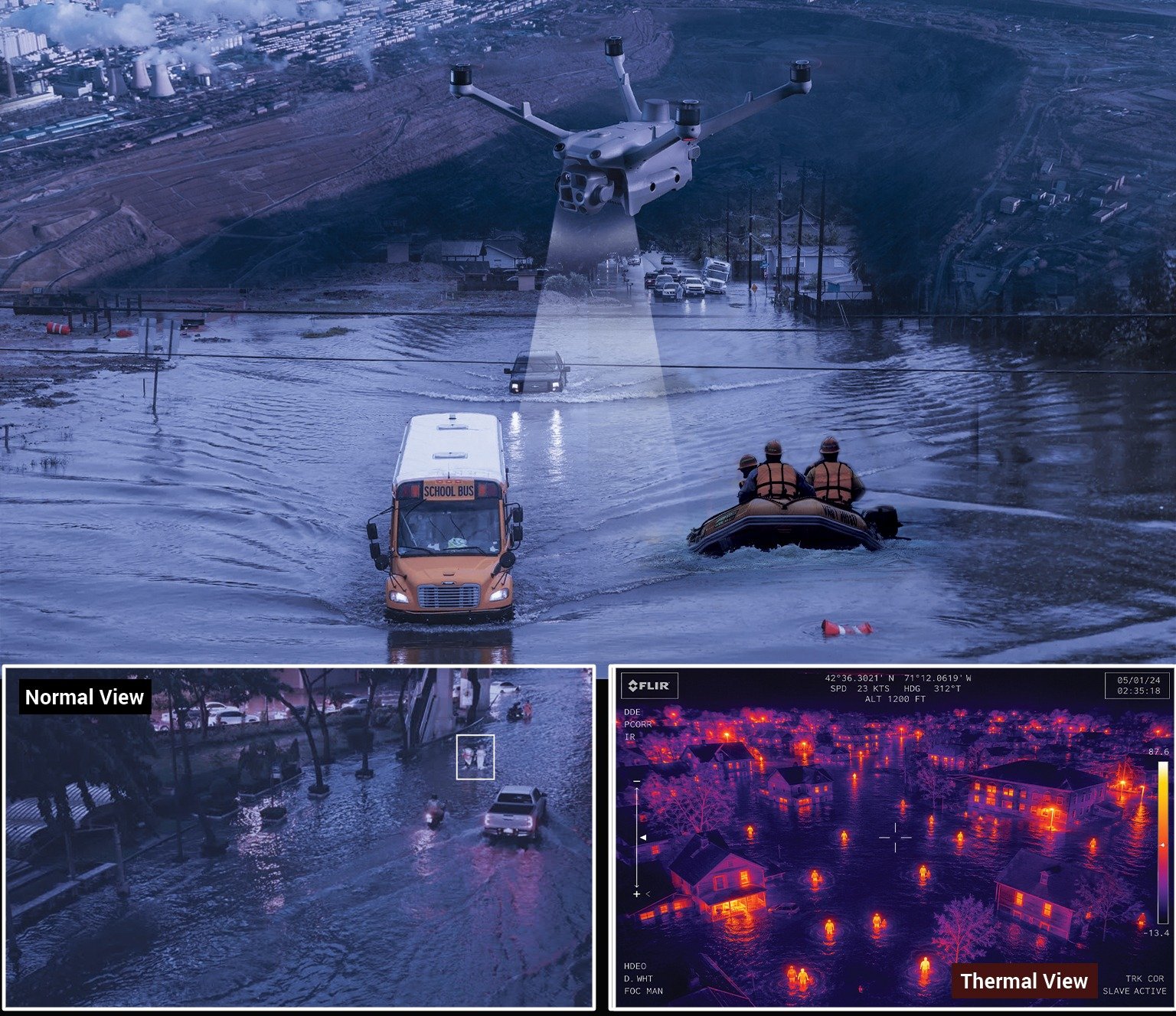
For this operation, I decided to use the DJI Matrice 4TD because of its advanced thermal imaging system, weather resistance, AI-assisted tracking, and multi-camera setup. In situations where visibility becomes poor due to rain, darkness, or fog, thermal technology can become extremely important.
During the preparation, my team and I were constantly talking about the risks involved:
- Heavy rain and strong winds
- Low visibility during night flying
- Unpredictable flood movement
- Difficulty locating stranded people
- Communication problems in affected villages
The more we discussed the situation, the more serious it started feeling.
Within a short time, we packed everything and left Delhi for Punjab.
Entering the Flood-Affected Area
After several hours of driving, we finally entered the affected region near Gurdaspur.
The situation on the ground felt completely different from what we had seen in news reports. Water was spread everywhere. Many roads had disappeared under floodwater. Rescue camps had already been established nearby, and people looked exhausted, frightened, and helpless.
Even before starting drone operations, the emotional impact of the situation was difficult to ignore.
Families were waiting for information about missing relatives. Rescue teams were continuously moving between flooded locations. Some people had spent hours sitting on rooftops waiting for help.
At that moment, I stopped thinking like a normal drone operator.
I started thinking like someone who needed to assist rescue teams as quickly and efficiently as possible.
Why I Chose DJI Matrice 4TD
The weather conditions that night were extremely challenging.
It was raining lightly, strong winds were present, and visibility was becoming worse every hour. Under those conditions, many standard drones would struggle to operate safely.
That is exactly where the DJI Matrice 4TD became useful.
In real rescue conditions, these features helped us the most:
- Thermal imaging camera for locating heat signatures
- Multi-camera system with zoom capabilities
- AI-powered object tracking
- Weather-resistant design
- Wide-angle camera for large area monitoring
- Laser range finder for location estimation
- DJI AS1 speaker for aerial communication during rescue operations
- DJI AL1 searchlight for better visibility in dark flooded areas
During night operations, the DJI AS1 speaker and DJI AL1 searchlight became surprisingly useful. In areas where visibility was extremely poor, the searchlight helped rescue teams identify movement near rooftops and flooded structures more clearly. The speaker attachment was also used to communicate with stranded families from the air, especially in locations where rescue boats could not immediately reach. Simple announcements like asking people to stay calm or move toward safer spots helped rescue teams coordinate more effectively.
The thermal camera became one of the most important tools during night operations because normal visual cameras could not clearly identify people in dark flood zones.
The First Flight
Later that night, we finally started the first drone operation.
I launched the drone carefully while rescue personnel monitored the live feed from the ground. Initially, the purpose was simple — understand the geographical condition of the affected region and identify severely flooded zones.
As the drone moved higher, the real scale of destruction became visible.
Large areas were underwater. Some homes were partially submerged. Roads had disappeared completely. In several places, only rooftops and trees were visible above the floodwater.
Even after years of flying drones, that view was difficult to process emotionally.
The drone’s thermal system helped us monitor areas where visual visibility was weak. Through aerial monitoring, we started identifying locations where rescue teams needed immediate attention.
A Moment I Still Remember
During one of the later flights, something happened that I still remember very clearly.
While scanning an affected region, I noticed an object floating in the water. For a few seconds, I honestly couldn’t tell if it was flood debris or a real person.
To verify properly, I switched to thermal view.
That is when a human heat signature became visible.
Immediately, I shared the coordinates and nearby location details with the rescue team on the ground. Within minutes, boats were redirected toward that area.
Thankfully, the person was still alive.
Later, we found out that it was a teenage girl who had been trapped for a long time in the floodwater. That moment completely changed the emotional weight of the mission for me.
Until then, it felt like a technical operation.
After that moment, it felt deeply personal.
Continuous Rescue Support
For the next several days, operations continued almost nonstop.
The drone was used for:
- Monitoring water movement
- Identifying stranded civilians
- Supporting rescue boats with live aerial visibility
- Sharing GPS locations with ground teams
- Finding safer movement routes
- Monitoring rescue camps and isolated zones
In a few locations, we also used the drone’s loudspeaker attachment to communicate with stranded families. Since many people were trapped in isolated areas with limited visibility, rescue teams used aerial announcements to guide them toward safer spots and inform them that help was on the way. Small things like this helped reduce panic during the operation.
In some areas, the drone’s loudspeaker support also helped rescue teams communicate instructions to people trapped in difficult locations.
Battery management became extremely important because long-duration flying was necessary throughout the operation. We continuously rotated batteries, monitored weather conditions, and adjusted flight plans according to rainfall intensity.
What I Learned From That Night
Before this experience, I mostly looked at drones as professional tools for filming, inspections, and commercial operations.
But this mission completely changed my perspective.
That night showed me how drone technology can genuinely help save lives when used correctly during emergencies.
It also reminded me that technology alone is never enough. Behind every successful rescue operation, there are exhausted rescue workers, volunteers, local teams, and countless people working under pressure to protect others.
The drone simply became one part of that larger effort.
Final Thoughts
Even today, whenever I think about flood rescue operations, that night comes back to my mind instantly.
The rain, the darkness, the tension inside rescue camps, the constant drone flights, and the feeling of watching real rescue efforts happen in real time — everything still feels unforgettable.
The drone handled the difficult conditions surprisingly well, especially during thermal operations and night visibility challenges. But more importantly, the experience showed me how powerful drone technology can become when it is used beyond content creation and commercial work.
Sometimes, drones are not just cameras in the sky.
Sometimes, they become part of saving lives.
UAV-VS-Drone-Key-Differences-You-Should-Know
How AI and Automation Will Change Drone Work in the Next Few Years.

DJI Mini vs Mavic Series: Best Drone for Travel, Photography & Videography
DJI Mini 2: The Ultimate Compact Drone for Stunning Aerial Shots