


How AI and Automation Will Change Drone Work in the Next Few Years.
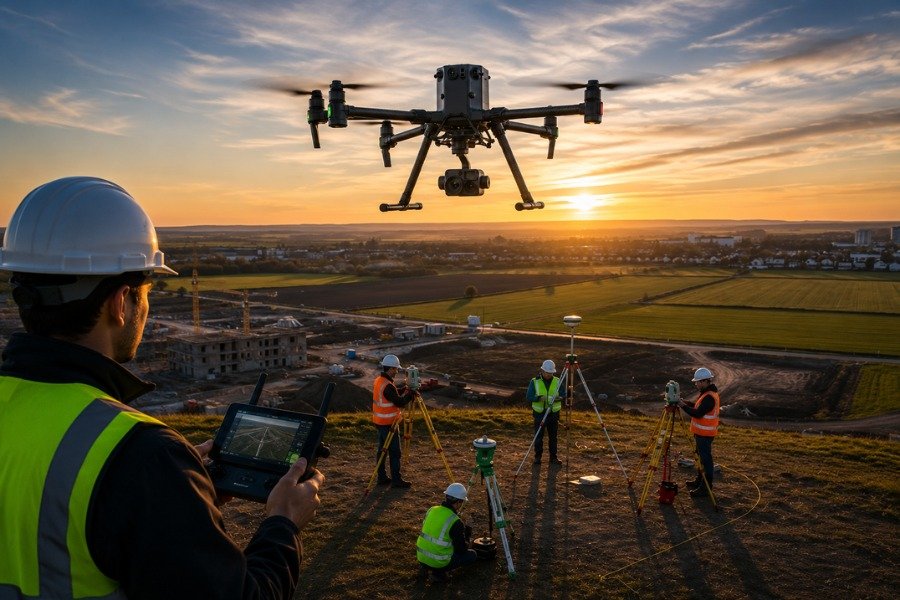
I’ve been flying drones for almost 4 years now, and one thing I’ve noticed recently is that the biggest change in this industry is no longer just better cameras or longer battery life. It’s AI.
A few years back, drone work mostly meant flying well, getting the shots, and coming back home. But honestly, that was only half the work.
After every flight, I used to spend hours transferring files, sorting photos and videos, checking footage properly, finding issues, and then preparing reports. Sometimes, even a basic inspection project would take another 4–5 hours after landing. The actual flying felt easier than the work after it.
That’s where AI is changing things a lot.
Flying is getting smarter
Drones have already become much easier to fly compared to a few years ago. Features like obstacle avoidance, automatic return, and smarter route planning have reduced a lot of manual effort for pilots.
Looking at how fast things are changing, it feels obvious that drone workflows will become far more automated in the next few years. Instead of planning every route manually, pilots will simply select the area or task, while the drone handles the rest.
That alone can save a lot of time.
The real time saver starts after landing
Personally, this is where I feel the biggest improvement.
Earlier, checking hundreds of images manually was honestly tiring. If you’re doing inspection work, mapping, or agriculture jobs, it can become repetitive very quickly.
Now AI tools can scan images and videos much faster and detect things like cracks, damaged solar panels, crop stress, heat issues, or construction defects.
It doesn’t remove all the work, but it definitely speeds things up compared to doing everything manually.
Of course, I still prefer reviewing important files manually before sending anything to clients, but AI definitely reduces a lot of repetitive work.
Predicting issues before they happen
This is probably one of the more practical uses of AI in day-to-day drone work.
Some advanced AI systems can already predict possible future issues by analyzing collected data.
For example, instead of only showing current damage, software can suggest that a certain component, panel, or structure may develop a problem in the next few months.
For teams working in infrastructure, maintenance, or large-scale inspections, this can make decision-making much easier.
Managing multiple drones
In the future, I think this will become normal.
Instead of one pilot managing one drone, a single operator may handle multiple drones together while AI manages route coordination, spacing, and safety.
That will completely change large-scale drone operations.
Who is benefiting the most right now?
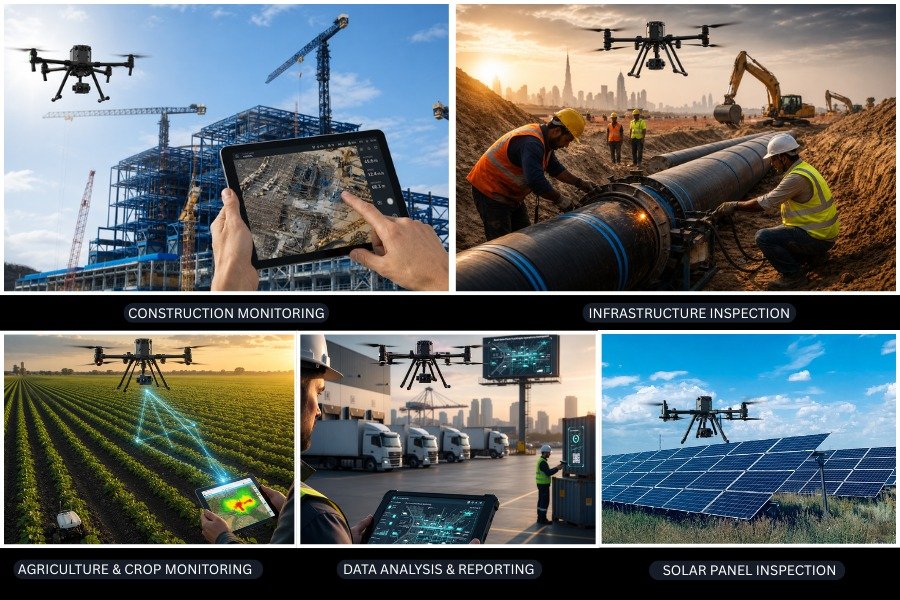
Right now, AI and automation are already helping a lot in:
• Real estate site surveys
• Agriculture and crop monitoring
• Solar panel inspections
• Construction progress tracking
• Infrastructure inspections
These industries save both time and manpower.
My personal opinion
One common concern I keep hearing is whether AI will eventually reduce the need for drone pilots.
I don’t really think that’s true.
AI is not replacing pilots — it’s removing repetitive tasks. The role of a drone operator is simply shifting.
Instead of wasting hours on manual sorting, checking, and reporting, pilots can focus more on planning projects, improving output quality, and handling clients better.
If you’re serious about drones as a career or business, I honestly think now is the right time to start learning AI-based tools and automation workflows.
The future of drone work is not just about flying well anymore.
Good flying skills will still matter, but understanding automation tools will probably matter just as much in the next few years.
UAV-VS-Drone-Key-Differences-You-Should-Know

A Flood Rescue Mission I’ll Never Forget – DJI Matrice 4TD Experience
DJI Mini vs Mavic Series: Best Drone for Travel, Photography & Videography
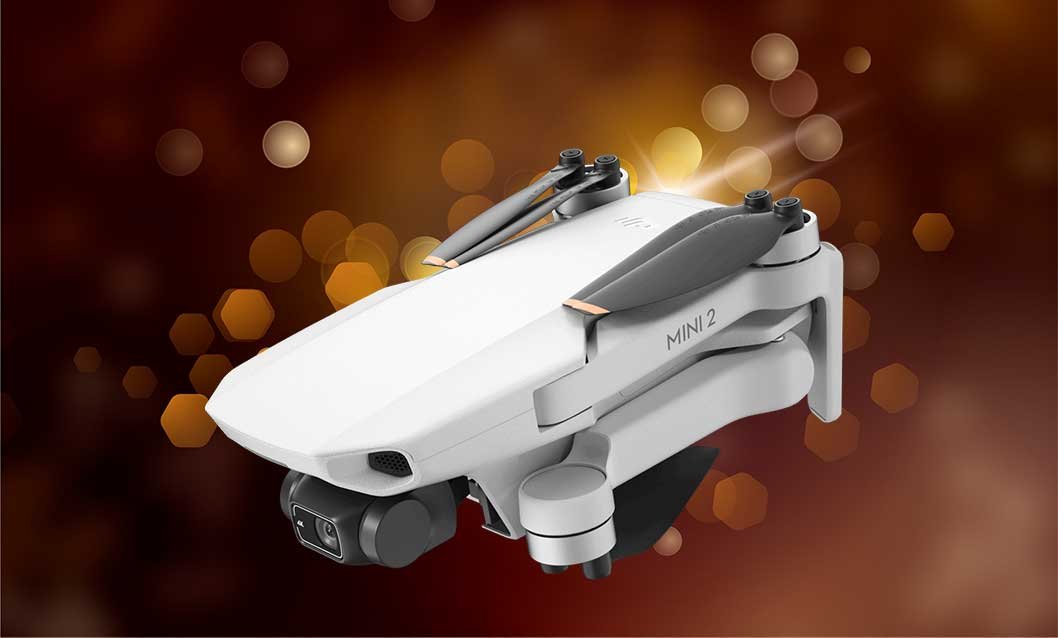
DJI Mini 2: The Ultimate Compact Drone for Stunning Aerial Shots